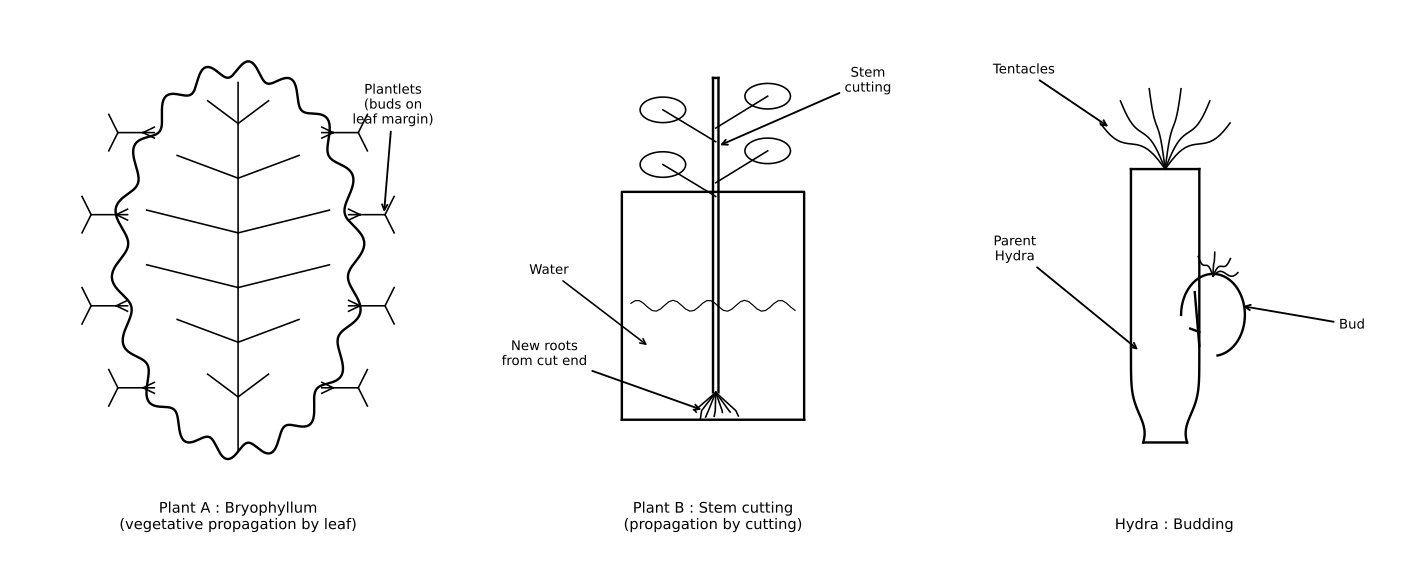
Riya is a Class 10 student who is studying reproduction in plants for her school project. She visits a garden and observes the following:
• A rose plant that was grown by her grandmother by cutting a stem and planting it in moist soil.
• A hibiscus flower that has both stamens and a pistil present in it.
• A wheat field nearby where plants produce seeds that are dispersed by wind.
Riya wonders how these different plants reproduce and what advantages each method offers.
Read the following passage and answer the questions that follow:
Riya is a Class 10 student who is studying reproduction in plants for her school project. She visits a garden and observes the following:
• A rose plant that was grown by her grandmother by cutting a stem and planting it in moist soil.
• A hibiscus flower that has both stamens and a pistil present in it.
• A wheat field nearby where plants produce seeds that are dispersed by wind.
Riya wonders how these different plants reproduce and what advantages each method offers.
(a) Name the method of reproduction used in the rose plant described above. To which category of reproduction does this method belong?
(b) Riya observes that the hibiscus flower has both male and female reproductive parts. What is such a flower called? Name the male and female reproductive organs present in it.
(c) Riya's grandmother says that plants grown from cuttings are 'exactly like the parent plant', but seeds from the wheat field produce plants that may show some variation. Give two reasons why:
(i) plants from cuttings are identical to the parent plant, AND
(ii) seeds can give rise to plants with some variation.
Show answerHide answer
[1 mark]
(b) A flower that has both male and female reproductive organs present in it is called a bisexual flower (or hermaphrodite flower).
The male reproductive organ is the stamen (which consists of the anther and filament).
The female reproductive organ is the pistil (also called carpel, which consists of the stigma, style, and ovary).
[1 mark]
(c)
(i) Plants grown from cuttings are identical to the parent plant because vegetative propagation is a form of asexual reproduction. In asexual reproduction, only one parent is involved and there is no fusion of gametes. The new plant is produced from the somatic (body) cells of the parent by mitotic cell division, so the genetic material (DNA) in the offspring is exactly the same as that of the parent. Hence, no variation is introduced.
(ii) Seeds are formed as a result of sexual reproduction, which involves the fusion of male gamete (from pollen) and female gamete (from ovule) to form a zygote. The offspring receives genetic material from two different parents. During gamete formation and fertilisation, new combinations of genes are produced. This mixing of genetic material from two parents introduces variation in the offspring, so plants grown from seeds may differ slightly from both parents.
[2 marks — 1 mark for each part of (c)]