ClearStepsCLEARSTEPS AI
Teacher Login →Student Login →

Microbes in Human Welfare: Class 12 Biology Practice Questions

30 original exam-pattern questions with full answers, matched to the current CBSE Class 12 paper design, including case-based questions. Attempt each question before opening the answer — or start a free 14-day trial ↓ for the full bank.

Q1Case-based4 marks

A rural community in Rajasthan set up a biogas plant using cattle dung slurry. The plant produced biogas that was used for cooking and lighting. The spent slurry left behind after biogas production was used directly on agricultural fields. Nearby, a small dairy cooperative started producing curd on a large scale and noticed that the curd made in the evening using a small amount of previously prepared curd (starter/inoculum) was ready by morning. The cooperative manager wondered whether the same microbes responsible for curd formation could also be used to treat the wastewater generated from washing dairy equipment.

Read the following passage and answer the questions that follow:

A rural community in Rajasthan set up a biogas plant using cattle dung slurry. The plant produced biogas that was used for cooking and lighting. The spent slurry left behind after biogas production was used directly on agricultural fields. Nearby, a small dairy cooperative started producing curd on a large scale and noticed that the curd made in the evening using a small amount of previously prepared curd (starter/inoculum) was ready by morning. The cooperative manager wondered whether the same microbes responsible for curd formation could also be used to treat the wastewater generated from washing dairy equipment.

(a) Name the main component of biogas and the group of microorganisms responsible for its production in the biogas plant. (1 mark)

(b) The spent slurry from the biogas plant is considered more useful than untreated cattle dung when applied to agricultural fields. Give one reason to justify this. (1 mark)

(c) Name the microorganism used as inoculum/starter for curd formation and state ONE role it plays beyond converting milk to curd that makes it beneficial to human health. (1 mark)

(d) The cooperative manager suggested using curd-forming bacteria (LAB) to treat dairy wastewater. Evaluate this suggestion — is it appropriate? Give a scientific reason to support your answer. (1 mark)

Show answer
MARKING SCHEME — COMPETENCY-BASED CASE STUDY (4 × 1 mark)

─────────────────────────────────────────
(a) Main component of biogas and responsible microorganisms: (1 mark)

• Main component: Methane (CH₄)
• Responsible microorganisms: Methanogenic bacteria (methanogens)
– Examples: Methanobacterium / Methanococcus (any one acceptable)

Acceptable answer for full mark: 'Methane, produced by methanogenic bacteria.'

─────────────────────────────────────────
(b) Why spent slurry is more useful than untreated cattle dung as fertiliser: (1 mark)

The spent slurry is rich in nutrients (nitrogen, phosphorus, potassium) in a readily bioavailable/soluble form because the organic matter has already been partially decomposed by microbes during biogas production; thus it acts as an excellent manure/biofertiliser that enriches soil fertility more effectively than untreated dung.

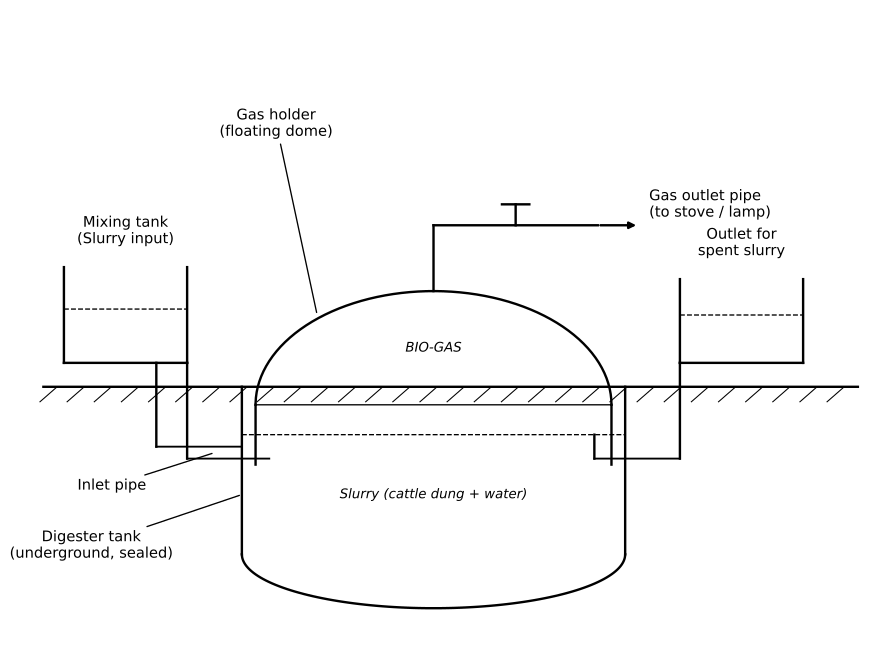
(Any ONE of the following value points is sufficient for full mark:)
– Nutrients are in a more bioavailable/soluble form
– Organic matter is pre-digested/decomposed, making nutrients directly accessible to plants
– It enriches soil fertility more effectively than untreated cattle dung

─────────────────────────────────────────
(c) Microorganism used as curd inoculum and its additional health benefit: (1 mark)

• Microorganism: Lactobacillus / LAB (Lactic Acid Bacteria) — e.g., Lactobacillus acidophilus
• Additional health benefit (any ONE acceptable):
– It produces vitamin B₁₂ during fermentation, thereby improving the nutritional value of curd.
– It checks the growth of harmful/pathogenic microorganisms in the gut (probiotic effect), thereby increasing resistance to gut infections.

(Either the name of the microorganism PLUS one health benefit together constitute the 1 mark value point.)

─────────────────────────────────────────
(d) Evaluation of the cooperative manager's suggestion to use LAB for treating dairy wastewater: (1 mark)

The suggestion is NOT appropriate / incorrect.

Scientific reason: LAB (Lactic Acid Bacteria such as Lactobacillus) are not suited for wastewater treatment. Wastewater treatment requires microorganisms — primarily aerobic heterotrophic bacteria and, in anaerobic digesters, methanogenic bacteria — that can decompose a wide range of complex organic pollutants and reduce Biological Oxygen Demand (BOD). LAB are specialised fermentative bacteria that act only on lactose/sugars in milk to produce lactic acid; they cannot efficiently break down the diverse organic waste present in dairy wastewater, nor do they reduce BOD significantly. Wastewater treatment is carried out in Sewage Treatment Plants (STPs) using flocs of aerobic microbes (bacteria and fungi) in aeration tanks, not by LAB.

(Any scientifically valid reason stating that LAB are not suited for wastewater/BOD reduction and that different microbes are required for sewage/wastewater treatment is acceptable for full mark.)
Q2Case-based4 marks

A municipal corporation in a mid-sized Indian city has been struggling with two interconnected problems. First, the city's sewage treatment plant (STP) is receiving wastewater with a BOD of 280 mg/L from a new food-processing industrial zone. After secondary treatment, the effluent BOD drops to 18 mg/L before being discharged into a nearby river. Second, the city's agricultural hinterland has seen a sharp decline in soil fertility over the past decade due to excessive use of chemical fertilisers, which has also led to eutrophication of local water bodies. A team of environmental biotechnologists has proposed a two-pronged solution: (A) retrofitting the STP with an enhanced biological treatment stage, and (B) launching a biofertiliser programme for local farmers using a combination of Rhizobium, Azospirillum, and Anabaena.

Read the following passage carefully and answer the questions that follow:

A municipal corporation in a mid-sized Indian city has been struggling with two interconnected problems. First, the city's sewage treatment plant (STP) is receiving wastewater with a BOD of 280 mg/L from a new food-processing industrial zone. After secondary treatment, the effluent BOD drops to 18 mg/L before being discharged into a nearby river. Second, the city's agricultural hinterland has seen a sharp decline in soil fertility over the past decade due to excessive use of chemical fertilisers, which has also led to eutrophication of local water bodies. A team of environmental biotechnologists has proposed a two-pronged solution: (A) retrofitting the STP with an enhanced biological treatment stage, and (B) launching a biofertiliser programme for local farmers using a combination of Rhizobium, Azospirillum, and Anabaena.

(i) The food-processing effluent has a BOD of 280 mg/L. After secondary treatment the BOD is 18 mg/L. Is the treated effluent safe to discharge into the river? Justify your answer using the concept of BOD as a water quality indicator. (1 mark)

(ii) During secondary (biological) treatment at the STP, large masses of 'flocs' are formed. (a) What are flocs? (b) How do they help reduce BOD? (1 mark)

(iii) The biotechnologists recommend Rhizobium, Azospirillum, and Anabaena as biofertilisers. For EACH organism, state: (a) its mode of nitrogen fixation (symbiotic / free-living / associative), and (b) one specific host or habitat it is associated with. (1 mark)

(iv) Explain how replacing chemical nitrogenous fertilisers with the proposed biofertiliser combination would help reduce eutrophication of local water bodies. (1 mark)

Show answer
MARKING SCHEME — Total: 4 marks (1 mark each sub-part)

─────────────────────────────────────────
Sub-part (i) [1 mark]
─────────────────────────────────────────
BOD (Biological Oxygen Demand) is defined as the amount of dissolved oxygen consumed by microorganisms to decompose organic matter present in a given volume of water over 5 days at 20°C.
• A high BOD indicates high organic pollution; clean river water has BOD < 1 mg/L.
• The treated effluent BOD of 18 mg/L is still very high compared to clean water standards (< 1 mg/L).
• Therefore, the treated effluent is NOT safe to discharge directly into the river — it will deplete dissolved oxygen in the river, harming aquatic life (fish kills, anaerobic conditions).
• The STP requires tertiary/additional treatment to bring BOD to acceptable levels before discharge.

[Award 1 mark for: correctly stating effluent is NOT safe AND giving a valid reason linked to BOD value / dissolved oxygen depletion / comparison with clean water standard.]

─────────────────────────────────────────
Sub-part (ii) [1 mark]
─────────────────────────────────────────
(a) Flocs: Masses/aggregates formed by bacteria (heterotrophic aerobic bacteria) intertwined with fungal filaments in aeration tanks during secondary (biological) treatment of sewage.
(b) How flocs reduce BOD: The bacteria in flocs consume/decompose the dissolved organic matter (soluble BOD) in the sewage aerobically (using O2 supplied by aeration/agitation). As organic matter is broken down, the BOD of the effluent falls significantly.

[Award 1 mark for: correct description of flocs as bacterial-fungal aggregates (½) AND correct mechanism of BOD reduction by aerobic decomposition of organic matter (½). Accept both parts for full 1 mark.]

─────────────────────────────────────────
Sub-part (iii) [1 mark]
─────────────────────────────────────────
Biofertiliser organisms — mode and habitat:

| Organism | Mode of N₂ fixation | Host / Habitat |
|---|---|---|
| Rhizobium | Symbiotic | Root nodules of leguminous plants (Fabaceae), e.g., soybean, gram, pea |
| Azospirillum | Free-living / Associative | Rhizosphere (soil around roots) of cereal crops, e.g., wheat, maize |
| Anabaena | Free-living (symbiotic in some contexts) | Free-living in waterlogged/paddy fields; also symbiotic in Azolla (water fern) |

All three fix atmospheric N₂ → ammonia (NH₃), enriching soil with bioavailable nitrogen.

[Award 1 mark for: all three organisms correctly matched with mode AND habitat/host. Accept any two correctly matched pairs for ½ mark; all three for full 1 mark. Note: Azospirillum is also acceptable as 'associative symbiont'.]

─────────────────────────────────────────
Sub-part (iv) [1 mark]
─────────────────────────────────────────
Link between chemical fertilisers → eutrophication, and how biofertilisers break this link:

• Chemical nitrogenous fertilisers (urea, ammonium nitrate) are water-soluble and not fully absorbed by crops.
• Excess nitrates/phosphates leach into water bodies through surface run-off → cause eutrophication (excessive algal/weed growth → algal blooms → O₂ depletion → death of aquatic organisms).
• Biofertilisers (Rhizobium, Azospirillum, Anabaena) fix atmospheric N₂ directly in/near the root zone and release nitrogen slowly in forms plants can absorb efficiently.
• Result: Greatly reduced chemical fertiliser application → less nitrate run-off → reduced nutrient loading of water bodies → eutrophication is minimised/prevented.

[Award 1 mark for: correctly explaining the mechanism — reduced chemical fertiliser use → less nitrate/phosphate run-off → reduced algal bloom/eutrophication. Must link biofertiliser use to reduced run-off to earn the mark.]

─────────────────────────────────────────
SUMMARY MARK ALLOCATION
(i) BOD safety judgement with justification — 1 mark
(ii) Floc definition + BOD reduction mechanism — 1 mark
(iii) Three organisms × mode + habitat — 1 mark
(iv) Biofertiliser → reduced run-off → reduced eutrophication — 1 mark
TOTAL = 4 marks
Q3Case-based4 marks

A farmer in Punjab noticed that his wheat crop was being severely damaged by a fungal pathogen. Instead of using chemical fungicides, an agricultural scientist advised him to use a soil bacterium as a biocontrol agent. The scientist also suggested that the farmer inoculate his legume crop (chickpea) with a specific microorganism to improve soil nitrogen levels naturally, and add another free-living microorganism to the soil to further enhance nitrogen availability. After one crop season, the farmer observed: (i) significant reduction in fungal disease, (ii) improved soil fertility, and (iii) reduced expenditure on chemical fertilisers and pesticides.

Read the following passage carefully and answer the questions that follow:

A farmer in Punjab noticed that his wheat crop was being severely damaged by a fungal pathogen. Instead of using chemical fungicides, an agricultural scientist advised him to use a soil bacterium as a biocontrol agent. The scientist also suggested that the farmer inoculate his legume crop (chickpea) with a specific microorganism to improve soil nitrogen levels naturally, and add another free-living microorganism to the soil to further enhance nitrogen availability. After one crop season, the farmer observed: (i) significant reduction in fungal disease, (ii) improved soil fertility, and (iii) reduced expenditure on chemical fertilisers and pesticides.

(a) Identify the soil bacterium recommended as a biocontrol agent against the fungal pathogen. Briefly explain the mechanism by which it controls fungal diseases. (2 marks)

(b) Name the microorganism used to inoculate the chickpea crop and the free-living microorganism added to the soil. State one role of each in improving soil nitrogen levels. (2 marks)

Show answer
CASE STUDY — MODEL ANSWER (4 marks)

(a) Biocontrol agent and mechanism: (1×2 = 2 marks)

• The soil bacterium recommended as a biocontrol agent against the fungal pathogen is Bacillus subtilis. (1 mark)

• Mechanism: Bacillus subtilis produces antifungal metabolites (such as iturin and bacillomycin) that inhibit the growth of fungal pathogens by disrupting their cell membranes / interfering with fungal cell wall synthesis, thereby suppressing fungal disease in the crop without harming the plant or the soil ecosystem. (1 mark)

---

(b) Microorganisms for nitrogen improvement: (1×2 = 2 marks)

• The microorganism used to inoculate the chickpea (legume) crop is Rhizobium (Mesorhizobium ciceri is the specific species associated with chickpea). Role: Rhizobium forms a symbiotic association with the roots of chickpea, living inside root nodules, where it fixes atmospheric nitrogen (N₂) into ammonia (NH₃) that is directly utilised by the plant; when nodules decay, fixed nitrogen is released into the soil, improving soil fertility. (1 mark)

• The free-living microorganism added to the soil is Azotobacter (or Azospirillum). Role: Azotobacter is a free-living aerobic soil bacterium that independently fixes atmospheric nitrogen (N₂) into ammonia/ammonium ions in the soil, making nitrogen available to plants and thereby enhancing soil nitrogen levels without forming a symbiotic association with the plant. (1 mark)
Q4Case-based4 marks

A dairy cooperative in Rajasthan was facing two problems simultaneously. First, their curd-making unit was not producing curd of consistent quality — sometimes the curd was too sour, sometimes it did not set properly. A microbiologist visited the unit and advised them to always add a small amount of previously prepared good-quality curd (called a 'starter') to fresh, warm milk before incubation. She explained that the microorganism responsible for curd formation also produces a vitamin that is beneficial for human health.

Second, the cooperative had a large amount of liquid whey (a byproduct of cheese-making) that was being discharged into a nearby pond, causing the water to turn greenish and foul-smelling within a few weeks.

Read the following passage carefully and answer the questions that follow:

A dairy cooperative in Rajasthan was facing two problems simultaneously. First, their curd-making unit was not producing curd of consistent quality — sometimes the curd was too sour, sometimes it did not set properly. A microbiologist visited the unit and advised them to always add a small amount of previously prepared good-quality curd (called a 'starter') to fresh, warm milk before incubation. She explained that the microorganism responsible for curd formation also produces a vitamin that is beneficial for human health.

Second, the cooperative had a large amount of liquid whey (a byproduct of cheese-making) that was being discharged into a nearby pond, causing the water to turn greenish and foul-smelling within a few weeks.

(i) Name the microorganism responsible for curd formation. What vitamin does it produce?
(ii) Why is it necessary to add a 'starter' (inoculum) to fresh milk for curd formation?
(iii) Identify the phenomenon occurring in the pond due to whey discharge. Give ONE reason why the water becomes foul-smelling.
(iv) Suggest ONE microbiological method by which the cooperative can treat the whey before discharging it, so that the pond is not harmed.

Show answer
MARKING SCHEME — CASE STUDY (Total: 4 marks)

(i) Microorganism and vitamin: (1 mark)
• Microorganism: Lactobacillus (LAB — Lactic Acid Bacteria) / Lactobacillus acidophilus
• Vitamin produced: Vitamin B12
(Award 1 mark for BOTH the organism name AND the vitamin; accept Lactobacillus / LAB for organism name)

(ii) Why starter/inoculum is necessary: (1 mark)
• The starter contains millions of Lactobacillus bacteria that are already active.
• These bacteria produce lactic acid, which lowers the pH of milk, causes coagulation of milk proteins (casein), and sets the curd.
• Without the starter, there are insufficient bacteria in fresh milk to initiate rapid, consistent fermentation — the process would be too slow or inconsistent.
(Award 1 mark for the idea that the starter provides the required live bacteria / inoculum to initiate and ensure consistent fermentation/lactic acid production)

(iii) Phenomenon in the pond and reason for foul smell: (1 mark)
• Phenomenon: Eutrophication
— Whey is rich in organic matter (nutrients); it raises the BOD (Biological Oxygen Demand) of the pond water and promotes excessive growth of algae and cyanobacteria (algal bloom), turning the water greenish.
• Reason for foul smell: Decomposition of dead organic matter and algae by anaerobic bacteria at the pond bottom releases foul-smelling gases such as hydrogen sulphide (H₂S) and methane (CH₄) due to anaerobic decomposition.
(Award 1 mark for correctly naming eutrophication AND giving a valid reason for the foul smell)

(iv) Microbiological treatment method: (1 mark)
• The whey can be treated by secondary (biological) sewage treatment:
— Whey is passed into aeration tanks where aerobic microorganisms (bacteria and fungi) form flocs and break down the dissolved organic matter, significantly reducing the BOD of the effluent before it is discharged.
• Alternatively: Biogas production — the whey can be fed into a biogas plant where methanogenic bacteria (e.g., Methanobacterium) decompose the organic matter anaerobically to produce biogas (methane + CO₂), which can be used as fuel by the cooperative, and the treated effluent has much lower BOD.
(Award 1 mark for any ONE valid microbiological treatment: secondary biological treatment / activated sludge process / biogas plant / anaerobic digestion by methanogens)

[Total: 1 + 1 + 1 + 1 = 4 marks]
Q5Case-based4 marks

A rural biogas plant operator noticed that his biogas plant was producing significantly less methane than expected, even though he was regularly feeding it with cattle dung slurry. On investigation, a microbiologist found that the plant had been accidentally contaminated with dissolved oxygen due to a faulty inlet seal. The microbiologist also noted that the liquid effluent (slurry) remaining after biogas production was being discarded into a nearby pond, causing excessive algal growth and a sharp decline in fish population. Meanwhile, a nearby organic farm was successfully using microbes to enrich its soil and reduce fertiliser costs — the farmer had inoculated legume seeds with a specific bacterium and was also applying a preparation of blue-green algae to his waterlogged paddy fields.

Read the following passage carefully and answer the questions that follow:

A rural biogas plant operator noticed that his biogas plant was producing significantly less methane than expected, even though he was regularly feeding it with cattle dung slurry. On investigation, a microbiologist found that the plant had been accidentally contaminated with dissolved oxygen due to a faulty inlet seal. The microbiologist also noted that the liquid effluent (slurry) remaining after biogas production was being discarded into a nearby pond, causing excessive algal growth and a sharp decline in fish population. Meanwhile, a nearby organic farm was successfully using microbes to enrich its soil and reduce fertiliser costs — the farmer had inoculated legume seeds with a specific bacterium and was also applying a preparation of blue-green algae to his waterlogged paddy fields.

Show answer
Sub-part (a) [1 mark]
Q: Why did the presence of dissolved oxygen cause a reduction in methane production in the biogas plant?

Methanogenic bacteria (e.g., *Methanobacterium*, *Methanococcus*) responsible for methane (CH₄) production are strict anaerobes — they cannot survive or function in the presence of oxygen.
• Dissolved oxygen entering through the faulty seal created aerobic conditions inside the digester.
• Anaerobic methanogenesis was inhibited → methane yield fell sharply.
*(Award 1 mark for identifying methanogens as strict anaerobes AND linking oxygen contamination to inhibition of methanogenesis.)*

---

Sub-part (b) [1 mark]
Q: Identify the phenomenon occurring in the pond receiving the biogas effluent. Name the process responsible for the decline in fish population.

• The phenomenon is Eutrophication — excessive nutrients (nitrogen and phosphorus compounds) from the effluent enrich the pond water → rapid, dense algal bloom (algal mat).
• The algal mat blocks sunlight; when algae die, microbial decomposition consumes dissolved oxygen → BOD (Biological Oxygen Demand) rises sharply → oxygen depletion → fish die due to hypoxia/suffocation.
*(Award 1 mark for correctly naming eutrophication AND stating BOD rise / oxygen depletion as cause of fish decline.)*

---

Sub-part (c) [1 mark]
Q: Name the bacterium used to inoculate legume seeds. Explain the mechanism by which it benefits the plant.

• Bacterium: ***Rhizobium* species** (symbiotic, lives in root nodules of leguminous plants — family Fabaceae).
• Mechanism: *Rhizobium* fixes atmospheric nitrogen (N₂ → NH₃, ammonia) using the enzyme nitrogenase under anaerobic microenvironments within nodules (maintained by leghaemoglobin).
• Ammonia is assimilated by the plant → provides bioavailable nitrogen → reduces need for chemical nitrogenous fertilisers.
*(Award 1 mark for naming Rhizobium AND stating symbiotic nitrogen fixation mechanism.)*

---

Sub-part (d) [1 mark]
Q: The farmer applied blue-green algae (BGA) to his paddy fields. (i) Name ONE example of BGA used as biofertiliser. (ii) State ONE additional advantage of using BGA specifically in waterlogged paddy fields.

(i) Example: ***Anabaena* (or *Nostoc*, or *Aulosira*)** — a free-living, nitrogen-fixing cyanobacterium (BGA).

(ii) Additional advantage (any ONE):
• BGA can fix atmospheric N₂ independently (free-living) and also add organic matter to the soil upon decomposition, improving soil texture.
OR
• In waterlogged (anaerobic) paddy fields, BGA form floating mats that perform photosynthesis and simultaneously fix nitrogen — dual benefit of oxygenating water surface and enriching soil nitrogen without chemical fertilisers.

*(Award ½ mark for correct BGA example + ½ mark for valid advantage specifically relevant to waterlogged/paddy field context.)*

---

Marking Summary:
| Sub-part | Key Value Point | Marks |
|---|---|---|
| (a) | Methanogens = strict anaerobes; O₂ inhibits methanogenesis | 1 |
| (b) | Eutrophication named; BOD rise → O₂ depletion → fish death | 1 |
| (c) | Rhizobium; symbiotic N₂ fixation via nitrogenase in root nodules | 1 |
| (d) | Anabaena/Nostoc named (½) + paddy-specific advantage (½) | 1 |
| Total | | 4 |
Q6Case-based4 marks

A wastewater treatment plant in a city receives large volumes of domestic sewage daily. The plant manager observes that the incoming sewage has a BOD of 300 mg/L. After passing through the treatment stages, the effluent released into a nearby river has a BOD of 2 mg/L. The plant uses large aeration tanks where sewage is constantly agitated and air is pumped in. Over time, the sewage develops visible mesh-like masses of bacteria and fungal filaments. The treated sludge from the secondary settling tanks is then transferred to large anaerobic tanks where it is further processed by a different group of microbes, producing a combustible gas mixture that the plant uses to generate electricity for its own operations.

Read the following passage carefully and answer the questions that follow:

A wastewater treatment plant in a city receives large volumes of domestic sewage daily. The plant manager observes that the incoming sewage has a BOD of 300 mg/L. After passing through the treatment stages, the effluent released into a nearby river has a BOD of 2 mg/L. The plant uses large aeration tanks where sewage is constantly agitated and air is pumped in. Over time, the sewage develops visible mesh-like masses of bacteria and fungal filaments. The treated sludge from the secondary settling tanks is then transferred to large anaerobic tanks where it is further processed by a different group of microbes, producing a combustible gas mixture that the plant uses to generate electricity for its own operations.

(a) What does the change in BOD values (300 mg/L to 2 mg/L) indicate about the quality of water? (1 mark)
(b) Name the mesh-like masses formed in the aeration tanks. What is their role in the treatment process? (1 mark)
(c) Name the group of microbes responsible for processing the sludge in the anaerobic tanks and identify the combustible gas mixture produced. (1 mark)
(d) The treated effluent (BOD = 2 mg/L) is released into the river. However, the plant manager is still advised to avoid releasing it near a lake with high nutrient levels. Explain the biological reason for this caution. (1 mark)

Show answer
MARKING SCHEME — Microbes in Human Welfare (Case Study) [1 × 4 = 4 marks]

(a) Change in BOD (300 mg/L → 2 mg/L): [1 mark]
• A decrease in BOD indicates a significant reduction in the amount of organic matter / biodegradable pollutants in the water.
• Lower BOD means fewer microorganisms are needed to decompose organic material, indicating that the water is now much cleaner / less polluted and safe for release into a natural water body.
(Award 1 mark for correctly stating that decreasing BOD indicates improvement in water quality / reduction in organic pollutants / water is cleaner.)

(b) Mesh-like masses + their role: [1 mark]
• Name: Flocs (also accept: flocculent masses / activated sludge flocs)
• These are masses formed by bacteria and fungal filaments that grow together in a net-like structure.
• Role: The microbes in the flocs consume / decompose the organic matter (dissolved biodegradable substances) present in the sewage aerobically, thereby significantly reducing the BOD of the effluent.
(Award 1 mark for naming 'flocs' AND stating their role in reducing BOD / decomposing organic matter. Both parts required for 1 mark.)

(c) Microbes in anaerobic tanks + combustible gas: [1 mark]
• Microbes: Methanogens / methanogenic bacteria (e.g., Methanobacterium)
• Combustible gas mixture produced: Biogas
— Composition: Methane (CH₄, ~55–70%) + Carbon dioxide (CO₂) + traces of H₂S
(Award 1 mark for naming methanogens/methanogenic bacteria AND identifying biogas / methane as the combustible product.)

(d) Biological reason for caution near a nutrient-rich lake: [1 mark]
• The treated effluent, even with low BOD, may still contain inorganic nutrients such as nitrates and phosphates.
• Releasing nutrient-rich effluent into a lake already high in nutrients can trigger Eutrophication — excessive growth of algae and cyanobacteria (algal bloom) on the water surface.
• The algal bloom blocks sunlight, and when the algae die and are decomposed by microbes, dissolved oxygen in the water is rapidly depleted, leading to the death of fish and other aquatic organisms (hypoxia / oxygen depletion).
(Award 1 mark for correctly explaining eutrophication / algal bloom / depletion of dissolved oxygen as the biological risk.)
Q7Case-based4 marks

A municipal corporation in a rapidly growing city was struggling with the management of large volumes of sewage generated daily. The treatment plant used a two-stage process. In the first stage, sewage was passed through settling tanks where heavy solids settled as primary sludge. In the second stage, the effluent from the first stage was pumped into large aeration tanks where it was vigorously agitated and air was continuously pumped in. After several hours, the BOD of the water was found to have dropped from 250 mg/L to below 10 mg/L. The resulting sludge from the second stage was then transferred to large anaerobic digesters. A gas mixture collected from the digesters was used to generate electricity for the treatment plant itself, making the plant partially energy self-sufficient.

Read the following passage carefully and answer the questions that follow:

A municipal corporation in a rapidly growing city was struggling with the management of large volumes of sewage generated daily. The treatment plant used a two-stage process. In the first stage, sewage was passed through settling tanks where heavy solids settled as primary sludge. In the second stage, the effluent from the first stage was pumped into large aeration tanks where it was vigorously agitated and air was continuously pumped in. After several hours, the BOD of the water was found to have dropped from 250 mg/L to below 10 mg/L. The resulting sludge from the second stage was then transferred to large anaerobic digesters. A gas mixture collected from the digesters was used to generate electricity for the treatment plant itself, making the plant partially energy self-sufficient.

(a) Identify the type of treatment described in the second stage and name the biological agents responsible for the reduction in BOD. (1 mark)

(b) What does the drop in BOD from 250 mg/L to below 10 mg/L indicate about the quality of the water? Explain why BOD is used as a measure of water pollution. (1 mark)

(c) Name the gas mixture collected from the anaerobic digesters and identify the specific group of microorganisms responsible for its production. (1 mark)

(d) The treated effluent is released into a nearby river. Despite the BOD being within safe limits, an ecologist warns that the release could still cause ecological damage. Suggest ONE reason for this warning and name the ecological phenomenon it could trigger. (1 mark)

Show answer
CBSE MARKING SCHEME — CASE STUDY (4 × 1 = 4 marks)

─────────────────────────────────────────
(a) [1 mark]

• Type of treatment: Secondary treatment / Biological treatment (½)
• Biological agents: Aerobic microorganisms / bacteria (that form flocs — mesh-like masses of bacteria entangled in fungal filaments) consume organic matter dissolved in the effluent, thereby reducing BOD. (½)

[Acceptable: 'aerobic heterotrophic bacteria', 'microbes in aeration tank'; award ½ + ½]

─────────────────────────────────────────
(b) [1 mark]

• The drop in BOD from 250 mg/L to below 10 mg/L indicates that the organic matter / pollutants in the water have been significantly reduced, meaning the water is now much cleaner / of better quality. (½)

• BOD (Biological Oxygen Demand) measures the amount of oxygen consumed by microorganisms to decompose organic matter in water; higher BOD = more organic pollution / lower dissolved oxygen = more polluted water. It is therefore a reliable indicator of the level of organic pollution. (½)

[Award ½ for quality improvement statement + ½ for correct explanation of BOD as pollution indicator]

─────────────────────────────────────────
(c) [1 mark]

• Gas mixture: Biogas — composed mainly of methane (CH₄, ~55–70%) and carbon dioxide (CO₂, ~30–40%). (½)

• Specific microorganisms: Methanogenic bacteria / methanogens (e.g., Methanobacterium) — strict anaerobes that act on the organic matter / sludge in the anaerobic digesters to produce biogas. (½)

[Award ½ for naming biogas/methane + ½ for naming methanogens/methanogenic bacteria]

─────────────────────────────────────────
(d) [1 mark]

• Reason for warning: The treated effluent, even with low BOD, still contains large quantities of inorganic nutrients — particularly nitrates (NO₃⁻) and phosphates (PO₄³⁻) — that are NOT removed during primary or secondary treatment. (½)

• Ecological phenomenon: These excess nutrients cause excessive growth of algae and aquatic plants → Eutrophication (also accept: algal bloom). This depletes dissolved oxygen in the river, leading to death of fish and other aquatic organisms. (½)

[Award ½ for identifying inorganic nutrients/nitrates/phosphates as the problem + ½ for naming eutrophication]

─────────────────────────────────────────
NOTE TO EXAMINER:
• Full credit for any biologically equivalent correct explanation.
• Do NOT deduct marks for spelling variations of organism names if the intended organism is clear.
• Sub-part (d) tests higher-order application — accept any scientifically valid ecological risk (e.g., disruption of food chain due to algal bloom) as long as eutrophication or equivalent phenomenon is named.
Q8Case-based4 marks

A municipal corporation in a rapidly growing city commissioned a new Sewage Treatment Plant (STP) to manage the increasing load of domestic and industrial wastewater. The plant manager reported that after primary treatment, the effluent was passed into large aeration tanks. After several hours of aeration, the liquid developed dense, brownish, mesh-like aggregates that settled at the bottom of the settling tank. The settled material was divided into two portions: a small fraction was pumped back into the aeration tank, while the bulk was transferred to large, sealed, oxygen-free digesters. After digestion, the remaining material was used on agricultural fields. Simultaneously, the gas produced in the digesters was captured and used to generate electricity for the plant itself.

During a routine water-quality audit, the environmental officer measured the BOD of the final effluent released into the nearby river. She found it had dropped from an initial value of 270 mg/L to 3 mg/L and declared the treatment satisfactory.

Read the following passage carefully and answer the questions that follow:

A municipal corporation in a rapidly growing city commissioned a new Sewage Treatment Plant (STP) to manage the increasing load of domestic and industrial wastewater. The plant manager reported that after primary treatment, the effluent was passed into large aeration tanks. After several hours of aeration, the liquid developed dense, brownish, mesh-like aggregates that settled at the bottom of the settling tank. The settled material was divided into two portions: a small fraction was pumped back into the aeration tank, while the bulk was transferred to large, sealed, oxygen-free digesters. After digestion, the remaining material was used on agricultural fields. Simultaneously, the gas produced in the digesters was captured and used to generate electricity for the plant itself.

During a routine water-quality audit, the environmental officer measured the BOD of the final effluent released into the nearby river. She found it had dropped from an initial value of 270 mg/L to 3 mg/L and declared the treatment satisfactory.

Show answer
Sub-part (a) [1 mark]
The dense, brownish, mesh-like aggregates formed in the aeration tank are called FLOCS (activated sludge). They are formed by aerobic bacteria enmeshed with fungal filaments. Function: The microorganisms in the flocs consume and break down the dissolved organic matter present in the sewage, thereby significantly reducing the BOD (Biological Oxygen Demand) of the effluent.

Sub-part (b) [1 mark]
The small fraction of settled sludge pumped back into the aeration tank is called the inoculum (returned/seeded activated sludge). Justification: It contains a large population of actively growing aerobic microorganisms. Returning it to the aeration tank seeds the incoming effluent with these microbes, maintaining a consistently high microbial population for rapid and efficient degradation of organic matter in each new batch of sewage, thus ensuring effective secondary treatment.

Sub-part (c) [1 mark]
The type of digestion occurring in the sealed, oxygen-free digesters is ANAEROBIC digestion (anaerobic sludge digestion). The specific group of bacteria responsible are methanogenic bacteria (methanogens), e.g., Methanobacterium. The gas produced is BIOGAS, whose composition is:
• Methane (CH₄): approximately 55–65% (major component)
• Carbon dioxide (CO₂): approximately 30–35%
• Traces of hydrogen sulphide (H₂S) and hydrogen (H₂)
This biogas was captured and used to generate electricity for the plant.

Sub-part (d) [1 mark]
BOD (Biological Oxygen Demand) is the amount of oxygen (in mg/L) consumed by microorganisms to oxidise/decompose the organic matter present in a given volume of water. A high BOD indicates high organic pollution. In this case, the BOD dropped from 270 mg/L to 3 mg/L, indicating that the secondary treatment was highly effective in removing organic matter, making the effluent safe for release into the river.
Q9MCQ1 mark

A municipal corporation collected sewage sludge from a secondary treatment plant and used it as manure in a public park. After six months, soil samples showed a significant increase in nitrogen-fixing bacterial colonies and improved plant growth, but also tested positive for coliform bacteria above the safe limit. Which of the following BEST explains why the treated sludge simultaneously promoted plant growth AND posed a public health risk?

Show answer
Correct Answer: (B)

Explanation (value point — 1 mark):

Secondary (biological) treatment uses aerobic microorganisms (forming flocs — aggregates of bacteria and fungal filaments) in aeration tanks to decompose organic matter, thereby significantly reducing BOD (Biological Oxygen Demand). The nutrient-rich effluent/sludge produced IS beneficial as manure because it contains mineralised nitrogen and other nutrients that support nitrogen-fixing bacteria and plant growth.

HOWEVER, secondary treatment is NOT a sterilisation process — it does NOT eliminate all pathogens. Coliform bacteria (e.g., Escherichia coli — indicator of faecal contamination) can survive secondary treatment and remain in the sludge. When this incompletely sanitised sludge is applied to soil, viable coliform bacteria are introduced, posing a public health risk even as the nutrient content benefits plant growth.

Why the other options are wrong:
- (A) is incorrect: secondary treatment DOES break down organic nitrogen (ammonification/nitrification occurs); coliforms do not proliferate simply because organic matter is added.
- (C) is incorrect: Rhizobium and Azotobacter are NOT classified as coliforms; coliforms are a distinct group (faecal indicator organisms).
- (D) is incorrect: primary treatment (physical settling) does NOT remove all pathogens; secondary treatment does NOT produce sterile effluent — this is a common misconception.

(1 mark for selecting B)
Q10MCQ1 mark

A dairy technologist notices that freshly prepared curd from a batch of pasteurised milk has a sharp, tangy flavour and a firm texture after incubation at 40°C for 6 hours. She then uses a small amount of this curd to inoculate the next batch of milk. Which of the following best explains the biochemical basis of curd formation and why the inoculum (starter culture) is essential?

Show answer
Correct answer: (B)

Reason:
• Lactic Acid Bacteria (LAB), e.g., Lactobacillus, are responsible for curd formation.
• LAB ferment lactose (milk sugar) anaerobically → lactic acid is produced.
• Accumulation of lactic acid lowers the pH of milk → acidic conditions cause denaturation and coagulation of casein (milk protein) → curd (semi-solid texture) forms.
• Pasteurisation kills all native microbes including LAB present in raw milk; therefore, the inoculum (starter culture = small amount of previously prepared curd) is essential to introduce LAB into the pasteurised milk to initiate fermentation.
• Additional benefit of LAB: increase vitamin B12 content of curd and check growth of harmful microbes.

Why other options are wrong:
• (A) is incorrect — LAB carry out anaerobic fermentation, not aerobic respiration; the enzyme description is also inaccurate.
• (C) is incorrect — rennet is from calf stomach (used in cheese making), not secreted by Streptococcus; inoculum is essential for fermentation, not just flavour.
• (D) is incorrect — LAB produce lactic acid, NOT ethanol + CO₂ (that is yeast fermentation); lactic acid lowers pH, it does not raise it.
Q11MCQ1 mark

Which one of the following microorganisms is correctly matched with its industrial product?

Show answer
Correct answer: (C) Monascus purpureus — Statins

Monascus purpureus (red yeast) produces statins, which are blood-cholesterol-lowering agents. Statins inhibit HMG-CoA reductase, the rate-limiting enzyme in cholesterol biosynthesis, thereby reducing LDL (bad cholesterol) levels.

Why the other options are incorrect:
• Aspergillus niger — produces Citric acid (not Streptokinase; Streptokinase is produced by Streptococcus bacteria).
• Saccharomyces cerevisiae — produces Ethanol and CO₂ (not Citric acid).
• Penicillium notatum — produces Penicillin (not Lactic acid; Lactic acid is produced by Lactobacillus).
Q12Short Answer1 mark

Assertion (A): Biogas produced in biogas plants contains methane as its major component and is used as a source of energy in rural areas.
Reason (R): Methanogenic bacteria such as Methanobacterium are strict anaerobes that produce methane by the decomposition of cellulosic material in the presence of oxygen.

Show answer
Correct option: (C) A is true, but R is false.

Explanation:
• Assertion (A) is TRUE: Biogas (produced in biogas plants) is composed chiefly of methane (CH₄, ~55–70%), along with CO₂ (~30–40%) and trace amounts of H₂S and N₂. It is widely used as a clean fuel for cooking and lighting in rural areas. (1 mark)
• Reason (R) is FALSE: Methanogenic bacteria (e.g., Methanobacterium, Methanococcus) are strict ANAEROBES — they carry out methanogenesis in the ABSENCE of oxygen, not in its presence. The decomposition of cellulosic/organic material in biogas plants occurs under anaerobic conditions. Oxygen would inhibit or kill methanogens entirely.
Q13MCQ1 mark

A food technologist tests four different beverages and records their microbial origin. Which of the following correctly identifies a product and the microorganism responsible for its production?

| Beverage | Microorganism |
|---|---|
| (A) Beer | Aspergillus niger |
| (B) Toddy | Saccharomyces cerevisiae |
| (C) Curd | Clostridium butyricum |
| (D) Vinegar | Lactobacillus acidophilus |

Show answer
Correct Answer: (B) Toddy — Saccharomyces cerevisiae

Toddy is a traditional fermented drink made from the sap of palms; it is fermented by Saccharomyces cerevisiae (yeast), which converts sugars to ethanol.

(1 × 1 = 1 mark)
Q14MCQ1 mark

A food technologist is testing two milk samples. Sample P was kept at 37°C after adding a small amount of previously prepared curd, while Sample Q was kept at 37°C with no addition. After 6 hours, Sample P had set into curd but Sample Q remained liquid. The technologist concluded that the setting of Sample P was due to a drop in pH caused by microbial activity. Which of the following correctly identifies the microorganism responsible AND the metabolic product that caused the pH drop in Sample P?

Show answer
Correct answer: (B) Lactobacillus — lactic acid

Lactobacillus (LAB) present in the added curd (starter culture) ferments lactose → lactic acid, lowering the pH of milk and causing casein proteins to coagulate — setting the curd. Sample Q lacked the starter culture and hence showed no pH drop or setting.

(1 mark for correct option B)
Q15MCQ1 mark

A dairy farmer notices that the milk she left at room temperature overnight has turned sour and formed a semi-solid curd. Her young daughter asks why this happened. Which of the following best explains the biological basis of this transformation?

Show answer
Correct answer: (A)

Lactobacillus (LAB — Lactic Acid Bacteria) present in milk carry out fermentation of lactose → lactic acid.
The accumulation of lactic acid lowers the pH of milk.
At low pH, casein (milk protein) coagulates (precipitates) → curd is formed.

Note: LAB also produce vitamins (especially Vitamin B12) during this process and improve the nutritional quality of curd over raw milk.
Q16Short Answer1 mark

Assertion (A): Biogas produced in a biogas plant contains methane as its major component and can be used directly as a fuel.
Reason (R): Methanogenic bacteria such as Methanobacterium are strict anaerobes that convert acetic acid and H₂ + CO₂ into methane during biogas production.

Show answer
Correct option: (A) Both A and R are true, and R is the correct explanation of A.

• Assertion is TRUE: Biogas is composed of ~55–70% methane (CH₄) + ~30–40% CO₂ + trace H₂S; methane makes it a combustible fuel used for cooking and lighting.
• Reason is TRUE and correctly explains A: Methanogenic bacteria (e.g., Methanobacterium, Methanococcus) are obligate/strict anaerobes present in the biogas plant. They carry out the final methanogenesis step — converting acetate (acetic acid) and H₂ + CO₂ into methane (CH₄), which is the primary reason biogas has high calorific fuel value.
• Since R directly explains the biochemical basis for the methane content stated in A, option (A) is correct.

[1 mark]
Q17Short Answer1 mark

Assertion (A): Cyclosporin A, used as an immunosuppressant drug in organ transplant patients, is produced by the fungus Trichoderma polysporum.

Reason (R): Immunosuppressants suppress the immune response of the recipient so that the transplanted organ is not rejected.

Show answer
Correct option: (B) Both A and R are true, but R is NOT the correct explanation of A.

Explanation:
• Assertion is TRUE: Cyclosporin A is indeed produced by Trichoderma polysporum (a fungus) and is used clinically as an immunosuppressant in organ transplantation.
• Reason is TRUE: Immunosuppressants correctly function by suppressing the immune response of the recipient, thereby preventing rejection of the transplanted organ.
• However, R is NOT the correct explanation of A: The Reason states the general pharmacological function of immunosuppressants, but does NOT explain why Cyclosporin A is specifically produced by Trichoderma polysporum (i.e., it does not address the source/production of the drug). The two statements are independent true facts; R does not causally explain A.

Hence option (B) is correct.
Q18MCQ1 mark

Which of the following correctly pairs a microorganism with its role in human welfare?

Show answer
Correct answer: (C) Trichoderma polysporum — production of cyclosporin A (immunosuppressant)

Explanation (for examiner reference):
• Trichoderma polysporum (a fungus) produces cyclosporin A, which is used as an immunosuppressant drug in organ transplant patients. (1)

Why the other options are incorrect:
• Option A: Monascus purpureus produces statins (not streptokinase). Streptokinase is produced by Streptococcus.
• Option B: Penicillium notatum produces Penicillin (an antibiotic), not statins. Statins are produced by Monascus purpureus.
• Option D: Aspergillus niger produces citric acid, which is used as a food preservative/flavouring agent — NOT as an antibiotic.
Q19MCQ1 mark

A dairy farmer noticed that her freshly prepared milk turned into curd overnight when left at room temperature. She observed that the curd had a slightly sour taste. Which of the following correctly explains this observation?

Show answer
Correct answer: (A)

Lactobacillus (LAB — Lactic Acid Bacteria) ferments lactose (milk sugar) → lactic acid. The accumulation of lactic acid lowers the pH of milk → milk proteins (casein) coagulate → curd is formed. LAB are also responsible for the slightly sour taste of curd. (1 mark)
Q20MCQ1 mark

A dairy farmer noticed that the curd prepared at home using a small amount of previous day's curd as 'starter' sets faster in summer than in winter. Which of the following BEST explains this observation?

Show answer
Correct option: (B)

Lactic Acid Bacteria (LAB) such as Lactobacillus are the microbes responsible for curd formation. They convert lactose (milk sugar) into lactic acid through fermentation.

Higher summer temperatures (optimum range ~30–40°C) accelerate:
(i) the growth and multiplication of Lactobacillus, AND
(ii) the rate of enzymatic activity (fermentation enzymes work faster at higher temperatures within the optimum range)

→ This leads to faster and greater lactic acid production → milk protein (casein) coagulates more rapidly → curd sets faster.

In winter, sub-optimal temperatures slow bacterial metabolism and growth, so curd-setting takes longer.

(Option A is incorrect — LAB produce MORE lactic acid in summer, not winter.)
(Option C is incorrect — bacteria are present in the starter throughout the year; it is their rate of reproduction/activity that changes with temperature.)
(Option D is incorrect — Lactobacillus is mesophilic, not thermophilic; it does not require temperatures above 35°C to survive.)

[1 mark for selecting option B]
Q21Short Answer2 marks

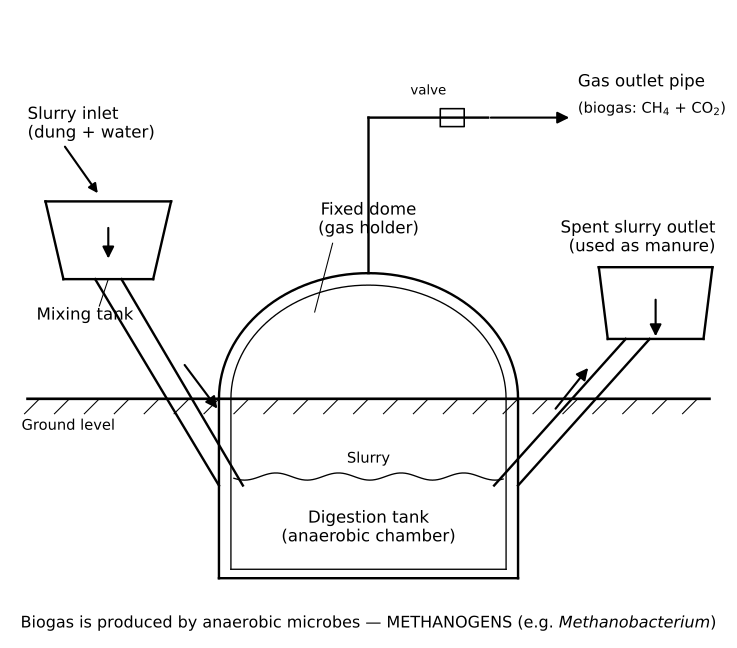
Draw a labelled diagram of a biogas plant. Name the group of microorganisms responsible for biogas production.

Diagram for question 21: Microbes in Human Welfare
Show answer
Labelled diagram of a biogas plant: (1 mark)

```
Slurry inlet
|

┌───────────────────────┐
│ │ ← Mixing tank
│ DIGESTION TANK │
│ (anaerobic chamber) │──────→ Gas outlet pipe
│ │ (biogas: CH₄ + CO₂)
└───────────────────────┘
|

Spent slurry outlet
(used as manure)
```

Required labels for full credit:
• Slurry inlet (dung + water mixture)
• Digestion tank / anaerobic digestion chamber
• Gas outlet / biogas outlet
• Spent slurry outlet

(Diagram with minimum 3 correct labels — 1 mark)

Group of microorganisms responsible for biogas production:
Methanogenic bacteria (methanogens) — e.g., Methanobacterium (1 mark)

Note: These are strict anaerobes that break down cellulose and other organic matter in the absence of oxygen to produce biogas (mainly methane, CH₄).

(1 × 2 = 2 marks)
Q22Short Answer2 marks

Name the biofertiliser that forms a symbiotic association with the roots of leguminous plants and state ONE way in which it benefits the plant.

Show answer
Biofertiliser: Rhizobium (1 mark)

Benefit: Rhizobium lives in the root nodules of leguminous plants and fixes atmospheric nitrogen (N₂) into ammonia (NH₃), which is then utilised by the plant for the synthesis of amino acids and proteins — thereby enriching the soil with nitrogen and reducing the need for chemical fertilisers. (1 mark)
Q23Short Answer2 marks

A village in Rajasthan installed a community biogas plant two years ago. Initially it produced enough biogas to meet cooking needs of 10 families. Recently, the villagers started adding only water (no cattle dung) to the mixing tank for several weeks due to a shortage of cattle. The gas output from the plant dropped sharply.

Study the labelled diagram of the biogas plant given below and answer the questions that follow:

[DIAGRAM IN QUESTION — Biogas Plant]

Mixing tank
(Slurry input)


┌─────────────────────┐ ← Gas holder (floating dome)
│ │──────────────► Gas outlet pipe
│ Digester tank │ (to stove/lamp)
│ (underground, │
│ sealed) │
└─────────────────────┘


Outlet for
spent slurry

(i) Using the diagram, identify which part of the plant is directly affected by the shortage of cattle dung, and name the group of microorganisms whose activity is reduced as a result.
(ii) The spent slurry collected from the outlet is not discarded by the villagers. State ONE reason why.

Diagram for question 23: Microbes in Human Welfare
Show answer
(i) The digester tank is directly affected — without cattle dung (organic matter/substrate), the methanogenic bacteria (methanogens) present in the digester tank have no organic matter to decompose, so their activity is reduced and biogas production falls. (1 mark)

(ii) The spent slurry is rich in minerals / nutrients and is used as manure / biofertiliser to improve soil fertility. (1 mark)

(Total: 1 × 2 = 2 marks)

── DIAGRAM TO BE DRAWN IN ANSWER BOOK ──

Labelled diagram of a Biogas Plant:

```
┌──────────────────────────────────────────┐
│ BIOGAS PLANT (Cross-section) │
└──────────────────────────────────────────┘

Cattle dung + Water


┌─────────────┐
│ MIXING │ ◄── Label 1: Mixing tank
│ TANK │
└──────┬──────┘
│ Slurry

╔══════════════════════════════╗ ◄── Label 2: Digester tank
║ ║ (underground, anaerobic,
║ DIGESTER TANK ║ sealed — methanogenic
║ (Methanogenic bacteria ║ bacteria act here)
║ decompose organic matter) ║
╚══════════╤═══════════════════╝
│ Biogas (CH₄ + CO₂)

┌───────────┐
│ FLOATING │ ◄── Label 3: Gas holder / Floating dome
│ DOME │ (collects and stores biogas)
│ (Gas │
│ holder) │
└─────┬─────┘
│ Pipeline

[Cooking stove / Lamp] ◄── Label 4: Gas outlet / supply pipe

┌──────────────────┐
│ SPENT SLURRY │ ◄── Label 5: Outlet for spent slurry
│ OUTLET │ (used as biofertiliser / manure)
└──────────────────┘
```

Note: All five labels must be present for full diagram credit.
Q24Short Answer2 marks

A farmer stops using chemical fungicides on his wheat crop and instead drenches the soil around the roots with a suspension of Trichoderma harzianum. A month later, the crop shows resistance to Fusarium wilt, even though Trichoderma was never directly applied to the aerial parts of the plant. (i) Name the mechanism by which Trichoderma protects the plant roots from Fusarium. (ii) Apart from biocontrol, state ONE additional benefit Trichoderma provides to the plant in the rhizosphere.

Show answer
(i) Trichoderma harzianum acts as a biocontrol agent by producing cell-wall-degrading enzymes (such as chitinases and glucanases) that lyse the hyphae of the pathogenic fungus Fusarium; it also competes aggressively for nutrients and space in the rhizosphere, thereby preventing colonisation of roots by the pathogen. This direct antagonism/mycoparasitism protects the plant from Fusarium wilt. [1 mark]

(ii) Trichoderma also functions as a biofertiliser / plant-growth promoter: it solubilises phosphates and produces growth-stimulating compounds (auxins, gibberellins) in the rhizosphere, making mineral nutrients more available to the plant and enhancing root development — thereby reducing the need for chemical fertilisers. [1 mark]

(Award 1 mark for each correct, justified point. Accept 'mycoparasitism' or 'antibiosis' for the mechanism in part (i). Accept 'phosphate solubilisation' or 'production of plant growth hormones' for part (ii).)
Q25Short Answer2 marks

Distinguish between primary and secondary sewage treatment on the basis of the process involved and the type of impurities removed.

Show answer
Primary sewage treatment — Physical process (sedimentation/filtration); removes floating debris and suspended solids (1 mark)

Secondary sewage treatment — Biological process (action of aerobic microbes/bacteria in aeration tanks forming flocs); removes dissolved organic matter and significantly reduces BOD (Biological Oxygen Demand) (1 mark)

(1×2=2)
Q26Short Answer2 marks

A dairy farmer notices that the milk he adds to a warm container every evening turns into curd overnight. He observes that if he uses a freshly cleaned, unused container (with no leftover curd from the previous batch), the milk does NOT set into curd even after the same time. (i) Name the microorganism responsible for curd formation and state ONE role it plays beyond converting milk to curd. (ii) Explain why the milk fails to set in the freshly cleaned container.

Show answer
(i) Microorganism: Lactobacillus (LAB — Lactic Acid Bacteria, e.g., Lactobacillus acidophilus). [½ mark]
Role beyond curd formation: LAB produce lactic acid which coagulates milk proteins AND increase vitamin B12 content of curd; they also check the growth of harmful microbes in the gut (any ONE valid role). [½ mark]

(ii) Curd formation requires an inoculum — a small amount of pre-formed curd ('starter') containing live Lactobacillus cells. In a freshly cleaned container with no leftover curd, no inoculum/starter culture is present, so Lactobacillus is absent and the conversion of milk to curd (lactic acid fermentation) cannot begin. [1 mark]

[Total: 2 marks]
Q27Short Answer2 marks

During the secondary (biological) treatment of sewage, flocs are formed in the aeration tank. (i) What are flocs? (ii) What happens to the BOD of sewage water after secondary treatment, and why?

Show answer
(i) Flocs are masses/aggregates of bacteria associated with fungal filaments that form mesh-like structures during vigorous aeration of sewage in aeration tanks. (1 mark)

(ii) The BOD of sewage water is significantly reduced (to a very low level) after secondary treatment, because the microbes (bacteria in flocs) consume and decompose most of the organic matter (dissolved biodegradable substances) present in the sewage, thereby greatly reducing the biological oxygen demand. (1 mark)
Q28Short Answer2 marks

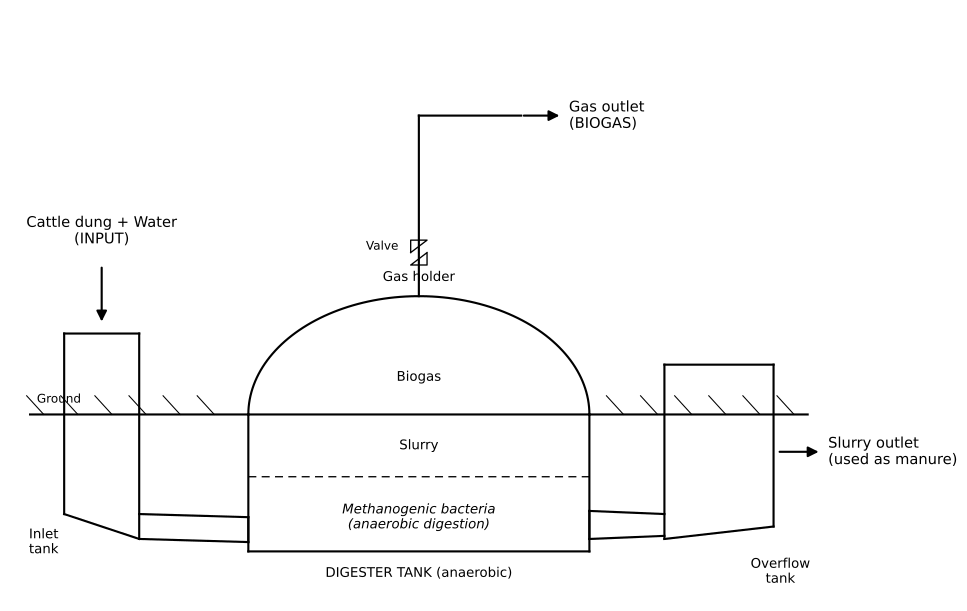
A student observed the following diagram of a biogas plant used in a rural village. Study the diagram and answer the questions:

(i) Name the group of microorganisms responsible for biogas production in such a plant.
(ii) Name the main combustible gas produced in this plant that makes biogas useful as a fuel.

Diagram for question 28: Microbes in Human Welfare
Show answer
Answer:

Diagram to be drawn in answer book:

```
INPUT
(Dung + Water)


┌─────────────────────┐
│ │◄── GAS OUTLET (Biogas)
│ DIGESTER TANK │
│ (Anaerobic zone) │
│ │
│ Methanogenic │
│ bacteria active │
│ here │
└─────────────────────┘


SLURRY
OUTLET
(used as manure)
```
Labels required: Input (cattle dung + water), Digester tank (anaerobic), Gas outlet, Slurry outlet, Methanogenic bacteria (site of action)

---

(i) The microorganisms responsible for biogas production are methanogenic bacteria (methanogens), e.g., *Methanobacterium*. They are strict anaerobes that act on the organic matter (dung) inside the digester tank. (1 mark)

(ii) The main combustible gas produced is methane (CH₄). It constitutes approximately 55–70% of biogas and is responsible for its fuel value. (1 mark)

(1 × 2 = 2 marks)
Q29Short Answer3 marks

A dairy farmer noticed that the curd prepared at home using a small amount of previously made curd as a starter (inoculum) was ready within 3–4 hours in summer, but took nearly 8–10 hours in winter to set. The farmer also observed that the curd prepared was slightly sour and had a pleasant aroma.

(i) Name the microorganism responsible for curd formation and state its role in the process.
(ii) Explain why curd sets faster in summer than in winter.
(iii) State ONE nutritional benefit of consuming curd over fresh milk.

Show answer
Answer:

(i) Microorganism responsible for curd formation:
Lactobacillus (LAB — Lactic Acid Bacteria), e.g., Lactobacillus acidophilus / Lactobacillus delbrueckii. (1 mark)
Role: LAB ferments lactose (milk sugar) → produces lactic acid → lactic acid lowers the pH of milk → causes coagulation/precipitation of milk protein (casein) → curd is formed. (1 mark)

(ii) Reason for faster setting in summer:
LAB are mesophilic bacteria — they grow optimally at warm temperatures (30–40°C). In summer, the ambient temperature is closer to the optimum growth temperature of LAB, so the bacteria multiply rapidly, produce lactic acid faster, and curd sets quickly (3–4 hours). In winter, the lower temperature slows down bacterial metabolism and reproduction, so acid production is slower and curd takes longer to set (8–10 hours). (1 mark)

(iii) Nutritional benefit of curd over fresh milk (any ONE acceptable):
— Curd contains increased amounts of Vitamin B12 synthesised by LAB during fermentation. / Curd is easier to digest than fresh milk because casein is already partially coagulated. / Curd contains probiotic bacteria (LAB) that improve gut health and restore normal microbial flora of the intestine. (1 mark)

[Total: 1 + 1 + 1 = 3 marks]
Q30Short Answer3 marks

Riya's family runs a small dairy business. During summer, they noticed that the curd prepared using a small amount of previous day's curd as 'starter' set faster and tasted more sour than usual. Her younger brother asked, 'If microbes make curd sour, why do we deliberately add them? Won't that spoil the food?'

(a) Name the microorganism used as a starter culture for curd formation and state the product it releases that causes the sour taste. (1 mark)
(b) Explain why adding a small amount of old curd to warm milk is essential for curd formation. (1 mark)
(c) Riya's brother thinks all microbes spoil food. Do you agree? Justify your answer using ONE example other than curd formation where microbes are beneficial to humans in the food/health sector. (1 mark)

Show answer
MARKING SCHEME — SA (3 marks)

(a) Microorganism and sour-taste product: (1 mark)
• Microorganism (starter culture): Lactobacillus / LAB (Lactic Acid Bacteria) — e.g., Lactobacillus acidophilus.
• Product responsible for sour taste: Lactic acid.
(Award ½ + ½ for both correct, OR 1 mark if student names LAB/Lactobacillus AND lactic acid in any format.)

(b) Why old curd (starter/inoculum) is essential: (1 mark)
• The old curd contains millions of live Lactobacillus (LAB) cells.
• These bacteria serve as an inoculum — they multiply rapidly in warm milk, ferment lactose → lactic acid → lowers pH → milk proteins (casein) coagulate → curd sets.
• Without the starter, the concentration of LAB in fresh milk is too low to bring about fermentation in a short time.
(Award 1 mark for the idea that old curd provides live bacterial cells / inoculum that initiates fermentation; partial credit ½ if only 'bacteria are present in old curd' is stated without linking to fermentation/curd setting.)

(c) Disagreement + one valid example beyond curd: (1 mark)
• No, not all microbes spoil food; many are beneficial.
• Any ONE of the following acceptable examples:
— Saccharomyces cerevisiae (yeast) is used in baking bread (produces CO₂ that makes bread rise) and in brewing/wine production (ferments sugars → ethanol).
— Penicillium notatum / P. chrysogenum produces Penicillin, the first antibiotic, used to treat bacterial infections.
— Aspergillus niger produces citric acid used as a food preservative/flavour agent.
— Trichoderma / Streptomyces produce antifungal/antibiotic compounds beneficial to human health.
— Propionibacterium shermanii produces CO₂ and propionic acid — responsible for holes and flavour in Swiss cheese.
(Award 1 mark for any one correct example with the name of organism AND its product/use. Award ½ if organism or use is given alone.)

——
Total: 3 marks
Note to examiner: Accept any standard NCERT-level example for part (c). Do not penalise for spelling variations in scientific names if the organism is identifiable.

Want unlimited practice on Microbes in Human Welfare?

The full ClearSteps bank has 47+ reviewed questions on this chapter alone — with step-wise solutions, difficulty levels, and progress tracking. Verify your WhatsApp number and your free trial starts right here.

CBSE · CLASS 12
🎟️14-day free trial · code PRAC auto-applied
Mobile Number
+91
OTP will be sent to your WhatsApp

⭐ Trusted by 12,000+ students across India

Microbes in Human Welfare Class 12 Biology Questions