A genetics student, Priya, is studying flower colour inheritance in a plant species. She crosses a true-breeding red-flowered plant with a true-breeding white-flowered plant. All F1 plants show pink flowers. When Priya self-pollinates the F1 plants, she obtains 240 plants in the F2 generation — 60 red-flowered, 120 pink-flowered, and 60 white-flowered.
In a separate experiment, Priya's classmate Rohan studies ABO blood group inheritance in humans. He notes that his father has blood group A (genotype I^A i) and his mother has blood group B (genotype I^B i). Rohan wants to predict all possible blood groups in their children.
Read the following passage carefully and answer the questions that follow:
A genetics student, Priya, is studying flower colour inheritance in a plant species. She crosses a true-breeding red-flowered plant with a true-breeding white-flowered plant. All F1 plants show pink flowers. When Priya self-pollinates the F1 plants, she obtains 240 plants in the F2 generation — 60 red-flowered, 120 pink-flowered, and 60 white-flowered.
In a separate experiment, Priya's classmate Rohan studies ABO blood group inheritance in humans. He notes that his father has blood group A (genotype I^A i) and his mother has blood group B (genotype I^B i). Rohan wants to predict all possible blood groups in their children.
(a) Identify the type of inheritance observed in Priya's experiment. Give ONE reason to justify your answer. (1 mark)
(b) Write the genotypes of the true-breeding red-flowered and white-flowered parent plants. Using a Punnett square, show the F1 and F2 generations, and state the genotypic and phenotypic ratios obtained in F2. (2 marks)
(c) From Rohan's family cross (I^A i × I^B i), list ALL possible blood groups (phenotypes) that can appear in their children. Which blood group demonstrates co-dominance, and why? (1 mark)
Show answerHide answer
─────────────────────────────────────────
(a) [1 mark]
─────────────────────────────────────────
• Type of inheritance: Incomplete dominance [½ mark]
• Justification: The F1 heterozygote (Rr) shows an INTERMEDIATE phenotype (pink) instead of expressing either parental phenotype fully; neither allele completely masks the other. [½ mark]
─────────────────────────────────────────
(b) [2 marks]
─────────────────────────────────────────
Genotypes of parents:
• True-breeding red-flowered parent: RR
• True-breeding white-flowered parent: WW
(Using R for red allele and W/r for white allele — standard NCERT notation: R¹R¹ × R²R² or RR × rr)
For clarity, using: R = red allele, r = white allele
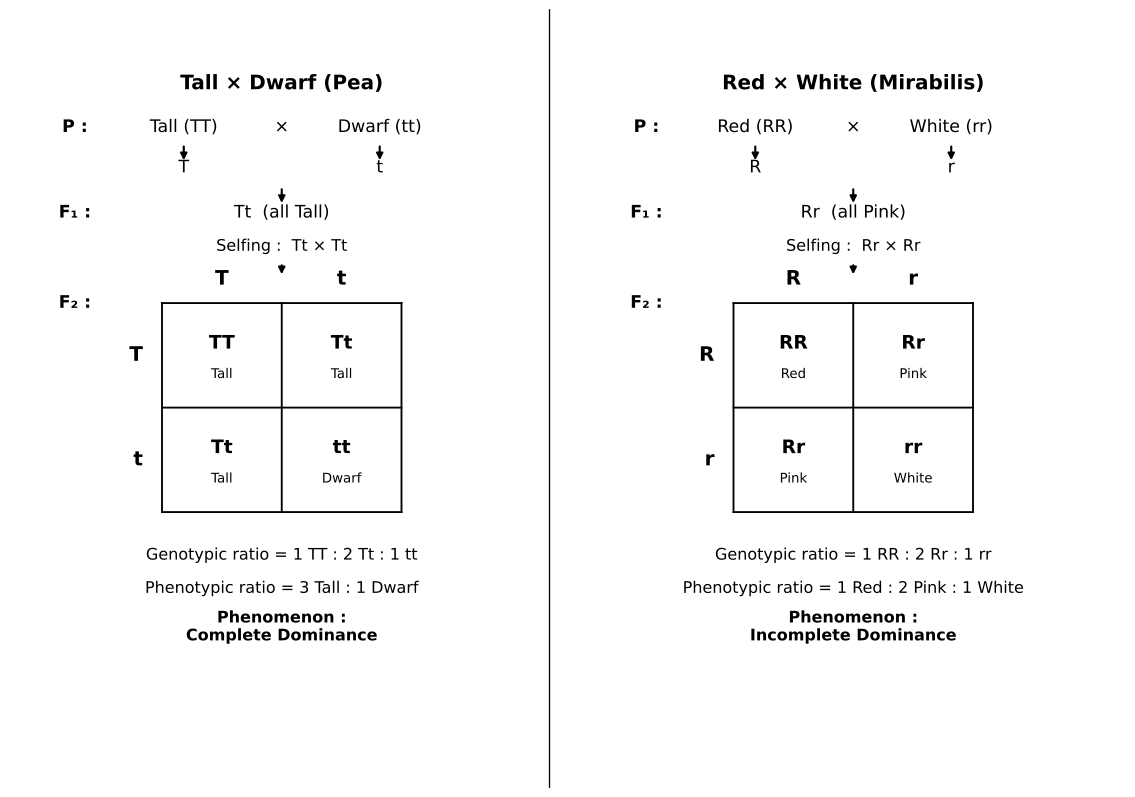
Parent (P): RR (red) × rr (white) [½ mark]
F1 Generation:
All F1 = Rr (PINK) — due to incomplete dominance
F1 self-pollination cross: Rr × Rr
GAMETES OF F1 PARENTS:
Rr parent produces gametes: R and r
PUNNETT SQUARE (F2): [½ mark]
┌─────────────┬──────────────┬──────────────┐
│ Rr × Rr │ R (gamete) │ r (gamete) │
├─────────────┼──────────────┼──────────────┤
│ R (gamete) │ RR │ Rr │
├─────────────┼──────────────┼──────────────┤
│ r (gamete) │ Rr │ rr │
└─────────────┴──────────────┴──────────────┘
F2 Results:
RR = Red-flowered → 1
Rr = Pink-flowered → 2
rr = White-flowered → 1
Genotypic ratio (F2): 1 RR : 2 Rr : 1 rr [¼ mark]
Phenotypic ratio (F2): 1 Red : 2 Pink : 1 White [¼ mark]
Verification with Priya's data:
Total = 240 plants → 60 RR (red) : 120 Rr (pink) : 60 rr (white) = 1:2:1 ✓
Note: In incomplete dominance, phenotypic ratio = genotypic ratio (BOTH are 1:2:1), unlike Mendelian dominance where F2 phenotypic ratio is 3:1.
─────────────────────────────────────────
(c) [1 mark]
─────────────────────────────────────────
Cross: Father I^A i × Mother I^B i
Gametes:
Father produces: I^A and i
Mother produces: I^B and i
Possible genotypes in children:
I^A I^B → Blood group AB
I^A i → Blood group A
I^B i → Blood group B
ii → Blood group O
All four possible blood groups in their children: A, B, AB, O [½ mark]
Blood group demonstrating co-dominance: AB (genotype I^A I^B) [½ mark]
Reason: In the I^A I^B individual, BOTH alleles I^A and I^B are expressed simultaneously and equally — I^A directs synthesis of antigen A and I^B directs synthesis of antigen B on the RBC surface. Neither allele is dominant over the other; both are fully expressed in the heterozygote — this is co-dominance.
─────────────────────────────────────────
KEY DISTINCTIONS (for examiner reference):
• Incomplete dominance: F1 shows INTERMEDIATE phenotype; F2 ratio = 1:2:1 (both phenotypic and genotypic).
• Co-dominance: BOTH parental phenotypes expressed simultaneously in F1 heterozygote (e.g., AB blood group shows BOTH A and B antigens).
• Multiple alleles: ABO blood group system has THREE alleles (I^A, I^B, i) for a single gene locus — only two present in any one individual.
─────────────────────────────────────────