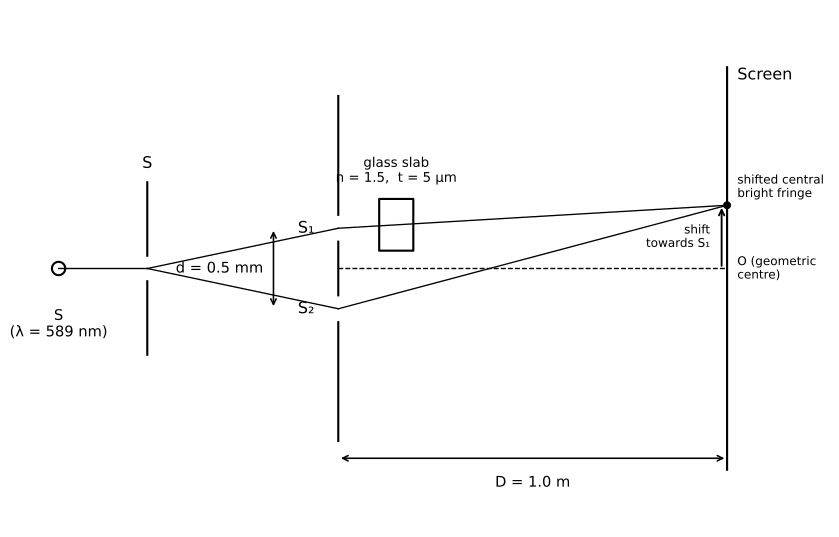
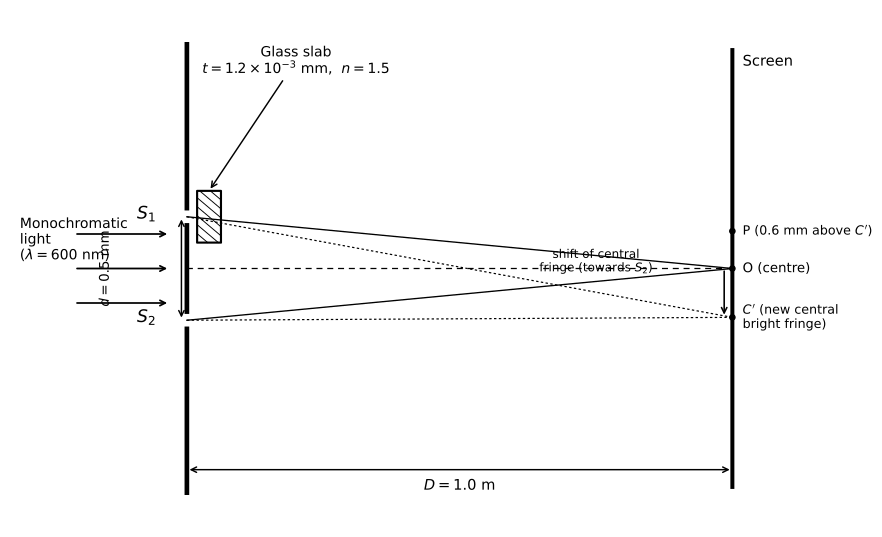
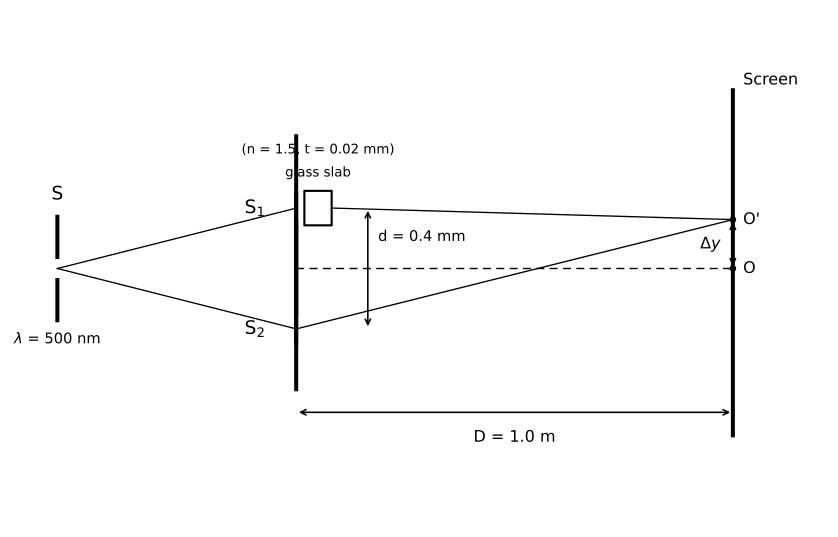
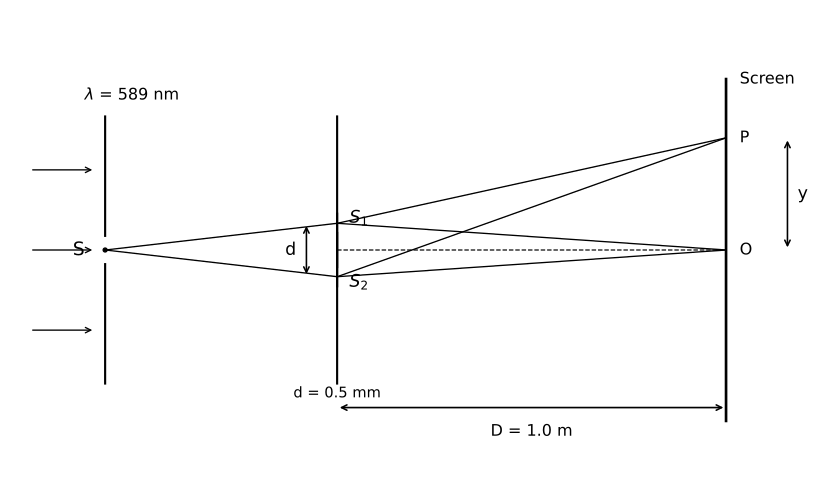
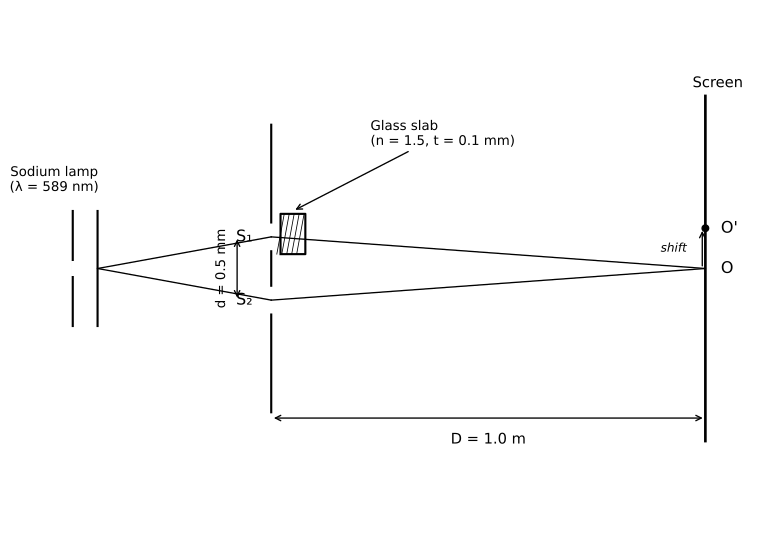
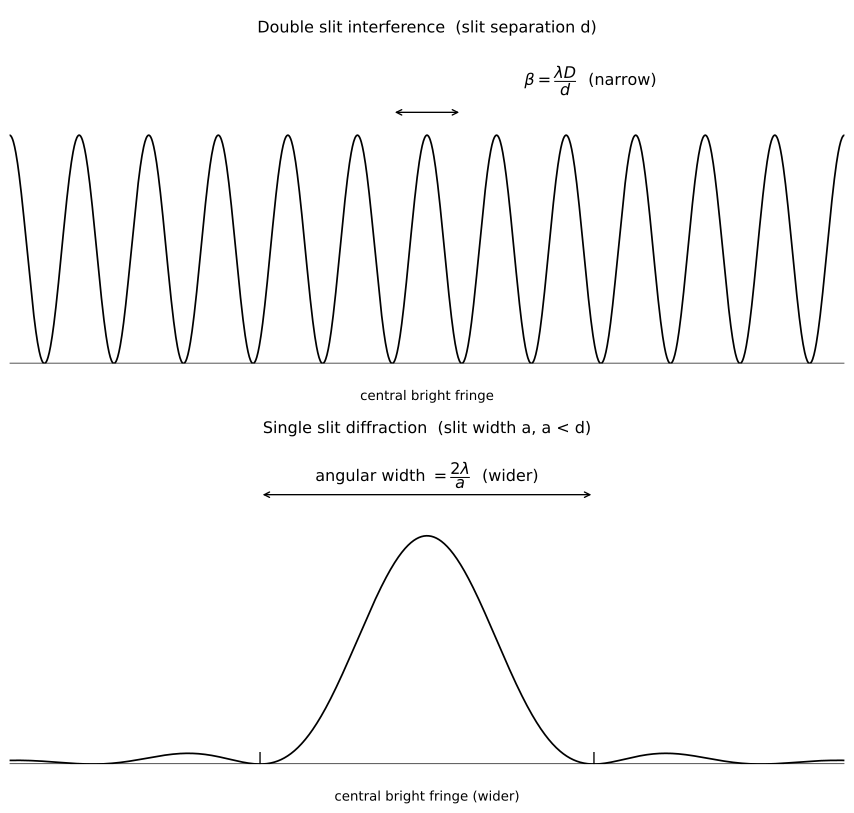
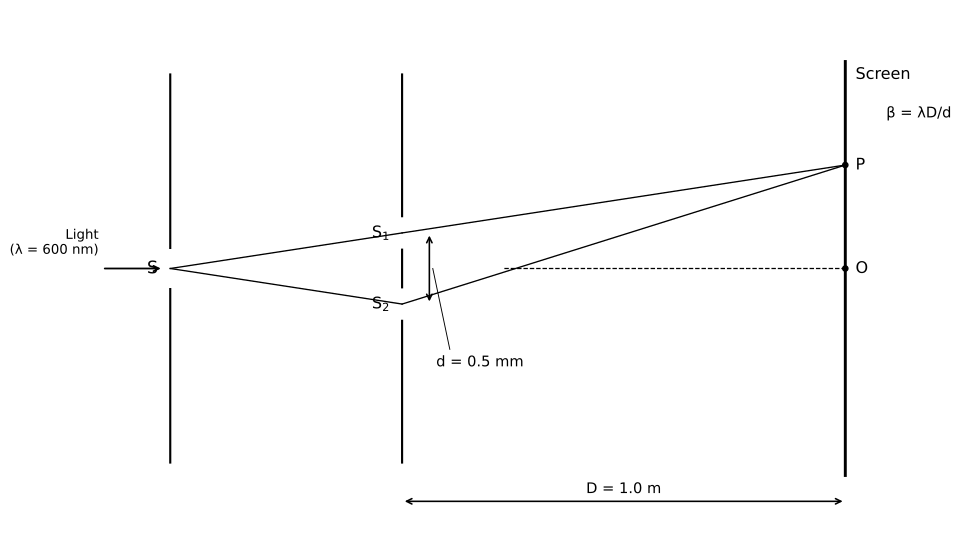
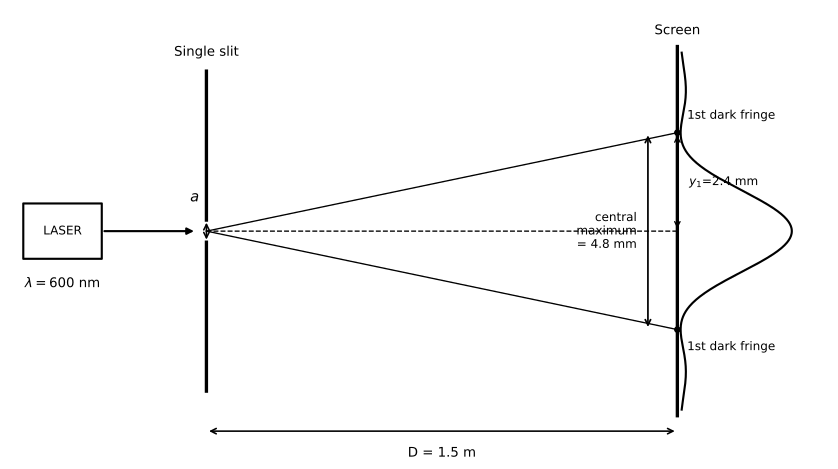
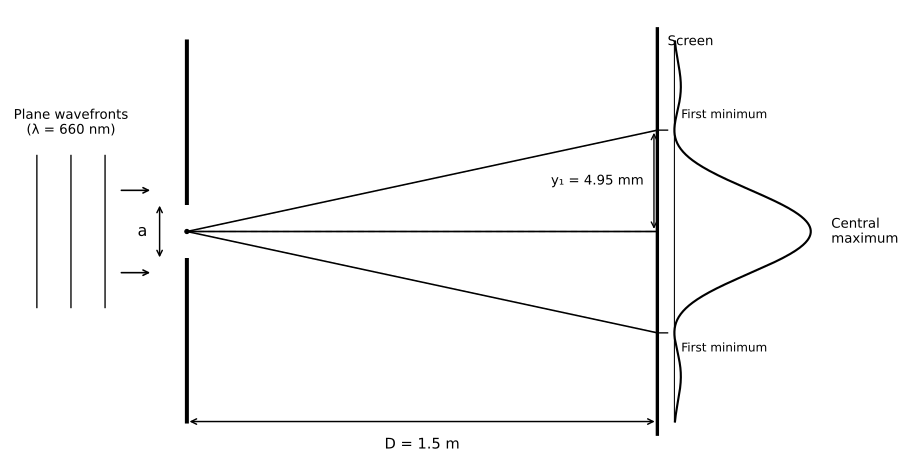
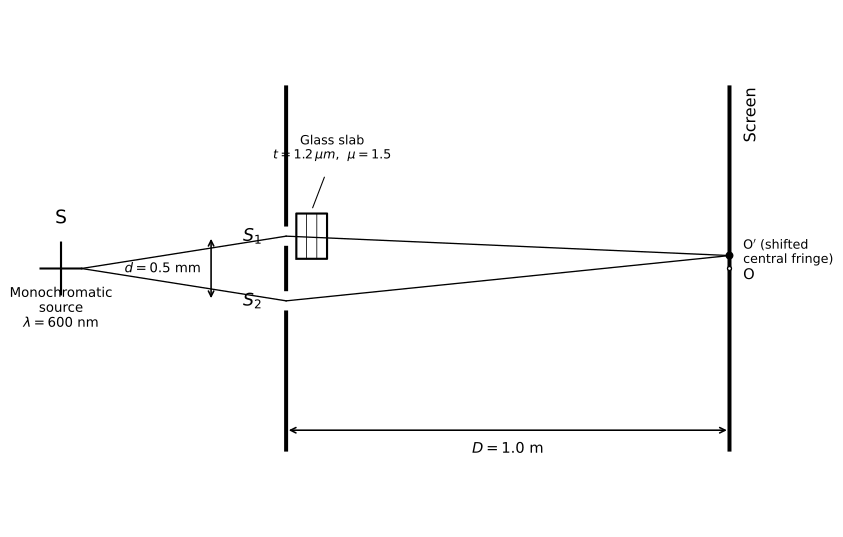
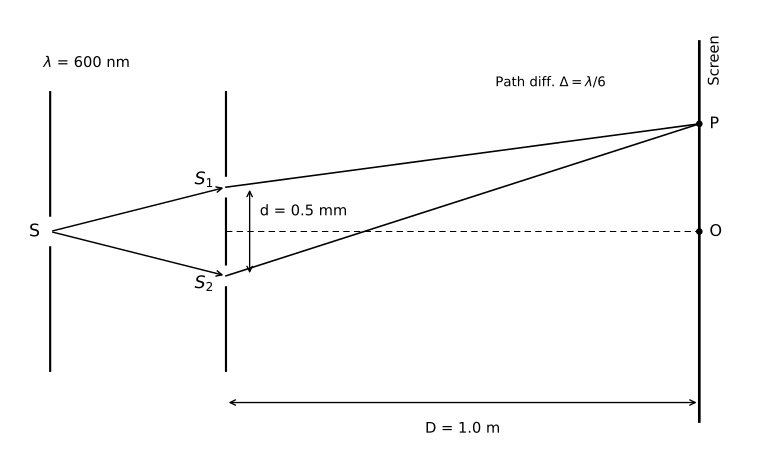
Young's Double Slit Experiment (YDSE) is a classic demonstration of the wave nature of light. When coherent light of wavelength λ passes through two slits separated by distance d, an interference pattern of alternating bright and dark fringes is formed on a screen at distance D. The fringe width is given by β = λD/d. When a transparent slab of refractive index n and thickness t is inserted in the path of one of the beams, the optical path through that beam increases by (n − 1)t, causing the entire fringe pattern to shift toward that slab by an amount Δy = (n − 1)t · D/d.
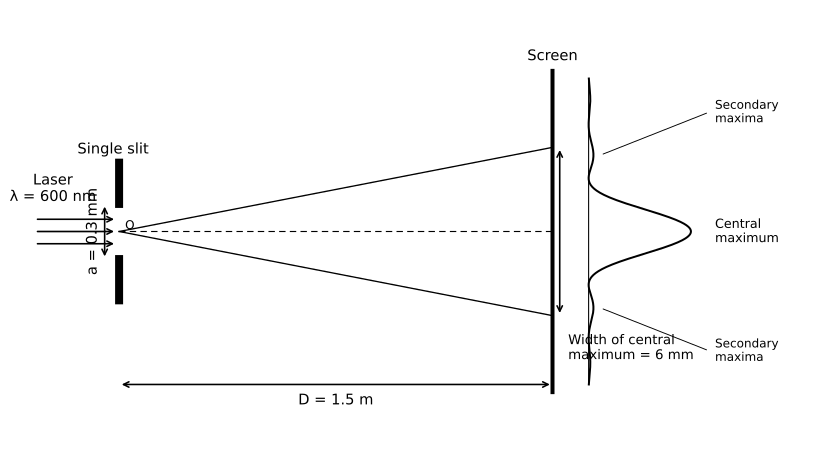
A school science exhibition features a demonstration of Young's Double Slit Experiment (YDSE). A laser pointer of wavelength 600 nm is directed at two narrow slits separated by 0.3 mm. The interference pattern is observed on a screen placed 1.5 m away.
(i) The demonstrator notices that when she places a thin transparent glass slab (refractive index 1.5) of thickness t in front of one of the slits, the central bright fringe shifts toward that slit by 5 mm. Find the thickness t of the glass slab.
(ii) After removing the glass slab, the demonstrator replaces the laser (λ = 600 nm) with a different source of wavelength 400 nm, keeping all other parameters the same. Find the ratio of the new fringe width to the original fringe width.
(iii) The demonstrator then asks a student: 'Why must the two slits be illuminated by the same source (or coherent sources) for a stable interference pattern?' Give a reason in one or two sentences.
(iv) If the distance between the slits is halved and the distance to the screen is doubled (laser λ = 600 nm restored), by what factor does the fringe width change?
Show answerHide answer
By the principle of optical path shift in YDSE, inserting a slab of refractive index n and thickness t in front of one slit increases its optical path by (n − 1)t.
The shift in the central fringe position is given by:
Δy = (n − 1)t · D/d
Given: Δy = 5 mm = 5 × 10⁻³ m, n = 1.5, D = 1.5 m, d = 0.3 mm = 3 × 10⁻⁴ m
Substituting:
5 × 10⁻³ = (1.5 − 1) × t × (1.5) / (3 × 10⁻⁴)
5 × 10⁻³ = 0.5 × t × 5000
5 × 10⁻³ = 2500 t
∴ t = (5 × 10⁻³) / 2500 = 2 × 10⁻⁶ m
∴ t = 2 μm
(ii) Ratio of new fringe width to original fringe width:
The fringe width in YDSE is given by:
β = λD/d
Since D and d remain unchanged:
β₁/β₂ = λ₁/λ₂
Original: λ₁ = 600 nm; New: λ₂ = 400 nm
β₂/β₁ = λ₂/λ₁ = 400/600 = 2/3
∴ Ratio of new fringe width to original fringe width = 2 : 3
(The fringe width decreases when a shorter wavelength source is used.)
(iii) Why coherent sources are necessary:
Two independent sources have a randomly and rapidly fluctuating phase difference. For a stable, observable interference pattern, the phase difference between the two interfering beams at any point on the screen must remain constant over time. Only coherent sources (derived from the same primary source) maintain a constant phase relationship, producing a sustained pattern of bright and dark fringes. Incoherent sources produce a phase difference that changes millions of times per second, washing out the fringes to give uniform illumination.
(iv) Change in fringe width when d is halved and D is doubled:
The fringe width is:
β = λD/d
New fringe width:
β' = λ(2D)/(d/2) = λ · 2D · 2/d = 4(λD/d) = 4β
∴ The fringe width increases by a factor of 4.